
This is one of those recipes that looks impressive but can be prepared in approximately 30 minutes. The pesto requires no cooking, and it can be blended while the pasta boils.
In addition to being quick, this recipe is easy to customize. You can use spaghetti, penne, fusilli, linguine, or another favorite pasta shape. Cherry tomatoes, grilled chicken, vegetables, or mozzarella can also be added for a more substantial meal.
Why Make Homemade Basil Pesto Pasta?
This recipe is perfect when you want a flavorful pasta using simple fresh ingredients. Basil provides the main aroma and color, while garlic, cheese, nuts, and olive oil create a balanced sauce.
Homemade pesto also allows you to control the texture. Process it briefly for a rustic sauce with visible pieces of basil and nuts or blend it longer for a smoother consistency.
Another advantage is that pesto does not need to simmer on the stove. The warm pasta and reserved cooking water are enough to loosen the sauce and help it coat each strand.
The recipe is also versatile. Pine nuts are traditional, but walnuts, almonds, cashews, or sunflower seeds can be used as practical alternatives.
See also other easy pasta recipes:
Penne with Spinach and Ricotta
Creamy Mushroom Spaghetti
Creamy Tomato Pasta
Ingredients
- 12 ounces of spaghetti, penne, or another preferred pasta
- 2 packed cups of fresh basil leaves
- ⅓ cup of pine nuts
- 2 garlic cloves
- ½ cup of freshly grated Parmesan cheese
- ½ cup of extra-virgin olive oil
- 1 tablespoon of fresh lemon juice
- ½ teaspoon of salt, or to taste
- ¼ teaspoon of black pepper
- ½ cup of reserved pasta water
- Additional Parmesan for serving
- Fresh basil leaves for decoration
- Cherry tomatoes, optional
Recipe Summary
| Time | Yield | Difficulty |
|---|---|---|
| 30 minutes | 4 servings | Easy |
How to Make Homemade Basil Pesto Pasta
Begin by bringing a large pot of salted water to a boil. Add the pasta and cook according to the package directions until it is al dente.
The pasta should be tender but still slightly firm in the center. It will soften a little more when combined with the pesto and cooking water.
While the pasta cooks, wash the basil leaves gently under cold running water.
Spread the basil on a clean kitchen towel or paper towels and dry it thoroughly. Excess moisture can weaken the flavor and make the pesto watery.
Place a small dry skillet over medium-low heat. Add the pine nuts and toast them for approximately two to three minutes.
Stir or shake the pan frequently because pine nuts can darken quickly. Remove them from the heat when they are lightly golden and fragrant.
Allow the toasted nuts to cool for a few minutes before placing them in a food processor or blender.
Add the garlic cloves, Parmesan, salt, black pepper, and cooled pine nuts to the processor.
Pulse several times until the ingredients are finely chopped.
Add the basil leaves and lemon juice. Pulse again until the basil is broken into small pieces.
With the processor running at low speed, slowly pour in the olive oil.
Continue processing until the pesto reaches your preferred consistency. Stop occasionally to scrape the sides of the container with a spatula.
Avoid blending for an unnecessarily long time. Excessive processing can warm the basil and affect its fresh green color.
Taste the pesto and adjust the salt, pepper, lemon juice, or Parmesan if necessary.
Before draining the pasta, reserve approximately half a cup of the cooking water.
Drain the pasta, but do not rinse it. The starch on its surface helps the pesto adhere more effectively.
Transfer the warm pasta to a large mixing bowl or return it to the empty cooking pot.
Add approximately three-quarters of the prepared pesto. Toss gently until the pasta is evenly coated.
Add the reserved pasta water one tablespoon at a time. Continue tossing until the pesto becomes smooth and coats the pasta without collecting heavily at the bottom.
Add more pesto according to your preference. The remaining sauce can be stored for another meal.
If using cherry tomatoes, cut them in half and gently fold them into the finished pasta.
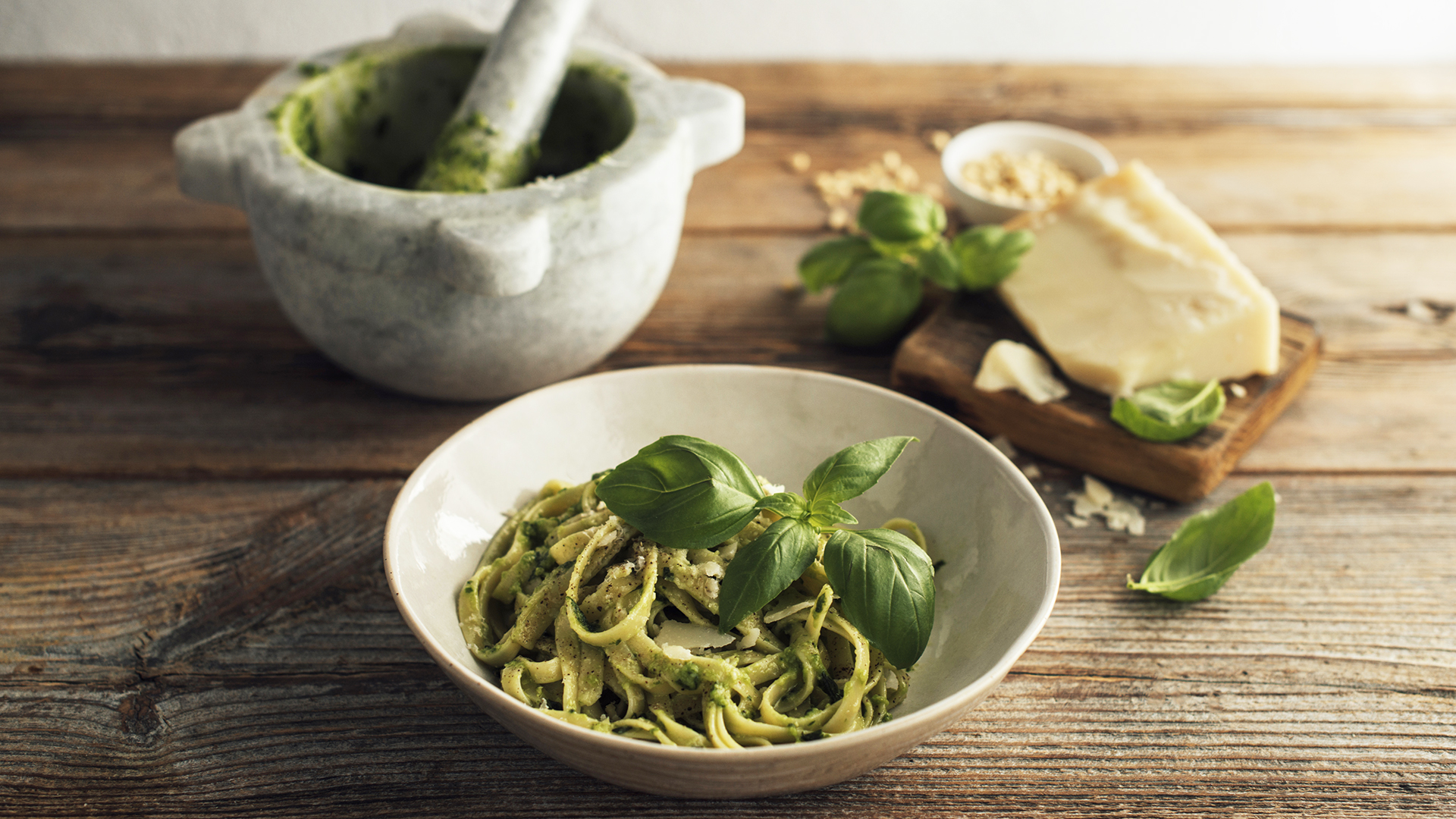
Divide the pasta among serving plates. Finish with additional Parmesan, black pepper, pine nuts, and fresh basil leaves.
Serve immediately while the pasta is warm and the pesto retains its fresh flavor.
Tips for Making the Best Basil Pesto
Choose fresh basil leaves with a bright green color. Avoid leaves that are wilted, very dark, or covered with damaged spots.
Dry the basil thoroughly after washing. Water left on the leaves can dilute the pesto and reduce its storage time.
Use only the tender basil stems. Thick stems may create a fibrous texture and a slightly bitter flavor.
Toast the pine nuts carefully. Light toasting develops their nutty flavor, but burning even a small quantity can affect the entire sauce.
Allow the nuts to cool before processing them with the basil. Hot ingredients can darken the leaves.
Begin with a small amount of garlic. Raw garlic has a strong flavor that becomes more noticeable as the pesto rests.
Use freshly grated Parmesan whenever possible. It blends more smoothly and generally provides a stronger flavor than pre-shredded cheese.
Add the olive oil gradually. This helps create a more even texture and allows you to stop when the pesto reaches your preferred consistency.
A small amount of lemon juice brightens the flavor and may help preserve the green color. Avoid adding too much because pesto should not taste strongly acidic.
Do not cook the pesto directly over high heat. Excessive heat can darken the basil and change its fresh flavor.
Combine the sauce with warm pasta away from direct heat. Reserved pasta water will loosen the pesto without requiring additional oil.
Walnuts, almonds, cashews, or sunflower seeds can replace pine nuts. Toast them lightly and allow them to cool before blending.
Pecorino Romano can replace part of the Parmesan for a stronger and saltier flavor.
Fresh spinach or arugula can replace some of the basil if you want a milder sauce or need to increase the quantity.
Grilled chicken, shrimp, roasted zucchini, peas, mushrooms, or mozzarella can be added to make the pasta more substantial.
Store leftover pesto in a covered container in the refrigerator. Pour a thin layer of olive oil over the surface to reduce contact with air.
Use refrigerated pesto within approximately three days. It can also be frozen in small portions for future recipes.
More practical recipes to prepare at home:
Conclusion
Homemade Basil Pesto Pasta is a quick and flavorful recipe that combines tender pasta with a fresh sauce made from basil, Parmesan, garlic, nuts, and olive oil.
Preparing the pesto at home allows you to adjust its texture, seasoning, and ingredients while keeping the cooking process simple.
Serve the pasta on its own or add tomatoes, vegetables, chicken, or mozzarella for a complete homemade meal that can be ready in approximately 30 minutes.

Linda Carter is a writer specializing in recipes and practical home cooking. With extensive experience helping readers prepare flavorful and accessible meals, Linda shares easy-to-follow recipes, helpful cooking tips, and creative ideas on our platform. Her goal is to make cooking simpler and more enjoyable, inspiring readers to create delicious dishes for everyday meals and special occasions.
[…] Penne with Spinach and Ricotta Creamy Mushroom Spaghetti Homemade Basil Pesto Pasta […]